Rigging Basics
Rigging connects the load to the hook. A rigging failure drops the load, so every rigger needs to know the weight, the center of gravity, the sling angle and the capacity of every piece of gear.
- Construction
- General Industry
Before you rig
- Know the weight of the load (from drawings, shipping papers, or a calculation by a qualified person). Add the weight of rigging.
- Find the center of gravity. The hook must be directly above it or the load will tilt or swing when lifted.
- Choose the hitch: vertical, choker or basket. Each changes the sling’s capacity. A choker hitch has a lower rated capacity than a vertical hitch.
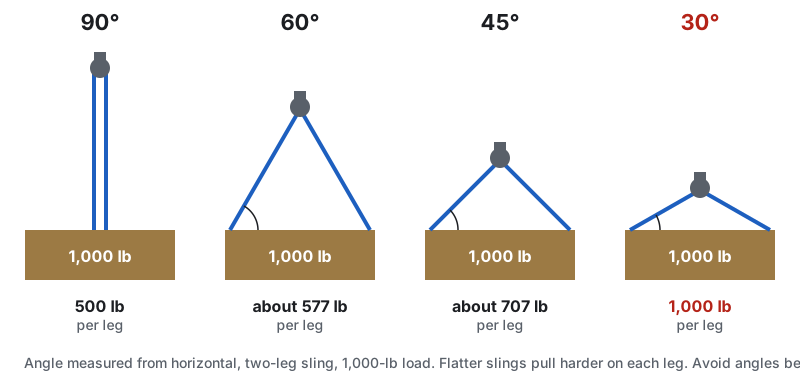
- Check sling angles. The lower the angle from horizontal, the more tension on each leg.
- Inspect all rigging before use. See Sling & Hardware Inspection.
- Protect slings from sharp edges with softeners or edge protection.
Qualified riggers
In construction, a qualified rigger must do the rigging whenever workers are in the fall zone while hooking, unhooking or guiding a load, and during assembly and disassembly of cranes. A qualified rigger has the knowledge, training and experience to rig the specific type of load safely. There’s no single national card; employers decide who is qualified, and many use third-party rigging certifications.
Types of slings
| Sling | Strengths | Weaknesses |
|---|---|---|
| Wire rope | Strong, durable, handles some heat | Kinks and crushes; stiff; broken wires cut hands |
| Alloy chain (Grade 80 or 100) | Tough, handles heat and rough loads | Heavy; links can stretch or crack |
| Synthetic web | Light, won’t mar finished surfaces | Easily cut by edges; damaged by heat and some chemicals |
| Synthetic round sling | Light, flexible, high capacity | Same cut and heat limits; damage can be hidden inside |
Only use alloy steel chain for overhead lifting, never transport chain or hardware-store chain.
Hitches
- Vertical: one sling straight from hook to load. Full rated capacity, but the load can spin.
- Choker: the sling wraps around the load and through its own eye. Grips the load, but capacity is reduced (often to about 75% or less).
- Basket: the sling cradles the load with both eyes on the hook. Up to double the vertical capacity when legs are vertical, but the load must be balanced so it can’t slide out.
Sling angle and tension
| Angle from horizontal | Load on each leg of a two-leg sling (for a 1,000 lb load) |
|---|---|
| 90° (vertical) | 500 lb |
| 60° | about 577 lb |
| 45° | about 707 lb |
| 30° | 1,000 lb |
Avoid sling angles below 30 degrees.
During the lift
- Lift a few inches first and stop. Check balance, the rigging and the brakes.
- Use tag lines to control the load. Never use your hands on a suspended load except as allowed during landing.
- Keep everyone out of the fall zone.
- Land loads on blocking (dunnage) so slings can be removed without crushing hands.
- Don’t tie knots in slings or shorten them with knots or bolts.
- Don’t pull slings out from under a resting load.
- Don’t exceed the rated load on any part of the rigging.
Video: rigging a load with a two-leg bridle
Standards & references
- 29 CFR 1926.251: Rigging equipment for material handling
- 29 CFR 1926.1425: Keeping clear of the load (qualified riggers)
- 29 CFR 1910.184: Slings
Last updated: