Bench Grinders
Bench grinders are found in almost every shop. When the gaps aren’t set right, work gets pulled between the wheel and the rest, and wheels can shatter.
- General Industry
- Construction
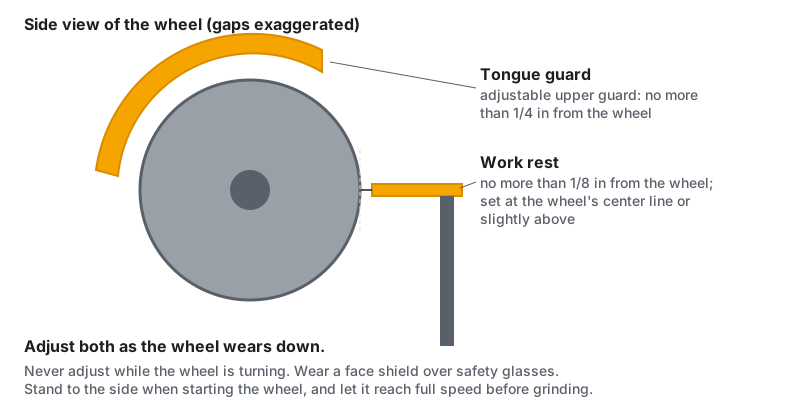
Set-up requirements
- Work rest: no more than 1/8 inch from the wheel
- Tongue guard (adjustable upper guard): no more than 1/4 inch from the wheel
- Side guards cover the spindle, nut and flange
- Grinder bolted to the bench or stand
- Wheel RPM rating equal to or higher than the grinder’s speed
- Eye shields in place (and still wear safety glasses plus a face shield)
Readjust the gaps as the wheel wears down.
Ring test before mounting a new wheel
Tap a clean, dry vitrified wheel lightly with a non-metallic object (like a screwdriver handle). A good wheel gives a clear ring. A dull thud means it may be cracked. Don’t use it.
Using the grinder
- Stand to the side when starting it and let it run for about a minute.
- Grind on the face of the wheel, not the side (unless the wheel is designed for it).
- Hold small parts with locking pliers or a holder.
- Dress the wheel when it’s glazed or out of round.
- Don’t wear gloves near the wheel (wire wheels especially). They can get caught.
- Don’t grind aluminum or other soft metals on a wheel meant for steel. It loads the wheel and can make it burst.
Video: setting bench grinder gaps and doing the ring test
Standards & references
- 29 CFR 1910.215: Abrasive wheel machinery
- 29 CFR 1926.303: Abrasive wheels and tools
Last updated: