State OSHA Plans Explained
The OSH Act lets states run their own workplace safety programs, called “State Plans,” as long as OSHA approves them and they are at least as effective as federal OSHA.
- Construction
- General Industry
- California
- Michigan
- Oregon
- Washington
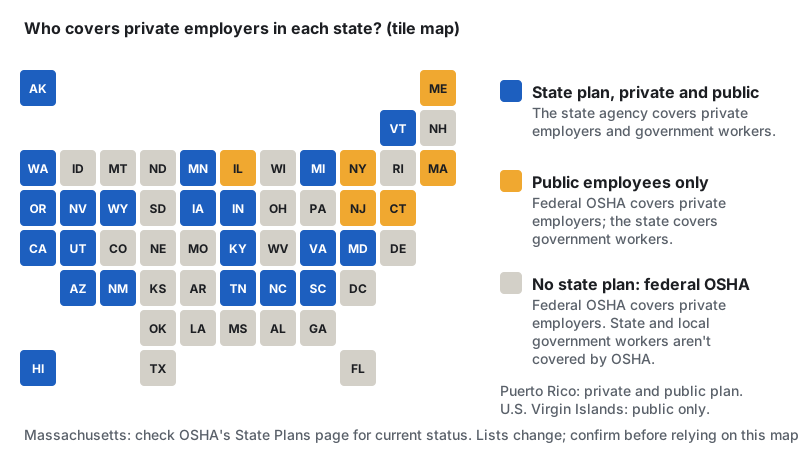
Three kinds of coverage
| Type | Who covers private employers | Who covers state and local government workers |
|---|---|---|
| State plan (private + public) | The state agency | The state agency |
| Public-employee-only state plan | Federal OSHA | The state agency |
| No state plan | Federal OSHA | Not covered by OSHA |
See the full list in the State Plan Directory.
How state rules can differ
- Stricter or additional rules: for example, heat illness rules, written safety program requirements, lower fall protection trigger heights, or required safety committees.
- Their own rule numbers: California uses Title 8 of the California Code of Regulations, Washington uses WAC 296, Oregon uses OAR 437, Michigan uses “Parts.”
- Different penalties and enforcement procedures.
- Many states simply adopt the federal standards word for word, with a few additions.
Important: Even in a state plan state, federal OSHA still covers some workplaces, such as federal agencies, many maritime operations and, in some states, specific industries or military bases. Check your state plan’s page to be sure.
Which rule do I follow?
Follow the rules of the agency with jurisdiction over your workplace. If you work in a state plan state, that means the state’s rules, which will be at least as protective as federal OSHA. When working in several states, check each one. Your employer’s program should account for this.
Standards & references
- OSHA: State Plans
- 29 CFR 1902: State plans for the development and enforcement of state standards
Last updated: