Masonry
Bricklayers and block masons face falls from scaffolds, silica dust, heavy lifting, and collapses of freshly laid walls in high wind.
- Construction
Photo: masonry wall under construction with bracing and a marked limited access zone
Top hazards
- Wall collapse before mortar cures, especially in wind
- Falls from scaffolds
- Silica dust from cutting block, brick and stone
- Back and shoulder strains from repetitive heavy lifting
- Cement burns from mortar
Key practices
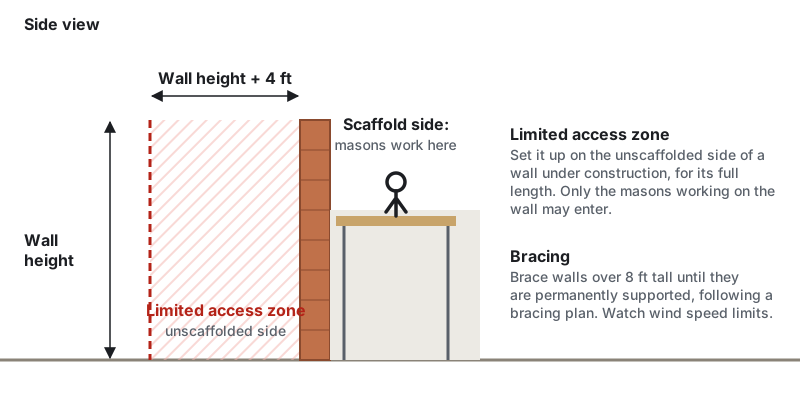
- Set up a limited access zone on the unscaffolded side of a wall under construction: the height of the wall plus 4 feet, running its full length. Only the masons working on the wall may enter.
- Brace walls over 8 feet tall until they’re permanently supported, per a bracing plan; watch wind speed limits.
- Use fully planked, guarded scaffolds inspected by a competent person. See Scaffolds.
- Cut wet or with vacuum dust collection. See Silica.
- Use forklifts and material platforms to stock block; rotate tasks.
Why new walls fall
A freshly laid masonry wall has almost no strength sideways until the mortar cures and the wall is tied into the structure. Wind pushing on a tall, unbraced wall can topple it onto anyone nearby. Walls under construction have killed masons and laborers working on the other side.
- Follow the wall bracing plan, which sets brace spacing and wind limits.
- Stop work and clear the limited access zone when the wind exceeds the plan’s limit.
- Don’t remove bracing until the wall is permanently supported.
Mast climbers and scaffolds
Masons often work from frame scaffolds or mast-climbing work platforms loaded with block, brick and mortar. Know the platform’s load limits, keep material stacked low and evenly, and keep the guardrails complete. See Scaffold Basics.
Cutting and mixing
- Cut block, brick and stone with a wet saw or a saw with vacuum dust collection. See Wet Saws and Silica.
- Mix mortar with the wind at your back, wear eye protection, and wash mortar off skin. See Cement Burns.
- Keep mixer guards in place and never reach into a turning mixer.
Daily checklist
- Limited access zone marked and respected
- Wall bracing installed per plan; wind forecast checked
- Scaffold inspected and tagged
- Saws with water or vacuum dust control
- Material stocked with forklift or telehandler, not carried by hand where avoidable
- Gloves, eye protection and hard hats on
Standards & references
- 29 CFR 1926.706: Requirements for masonry construction
- See also: Material Storage (stacking block and brick)
Last updated: