Excavating Near Buildings & Roads
Digging next to a building, wall, sidewalk or road can undermine it, causing collapse into the excavation and onto workers. Nearby structures also put extra weight on trench walls.
- Construction
Rules
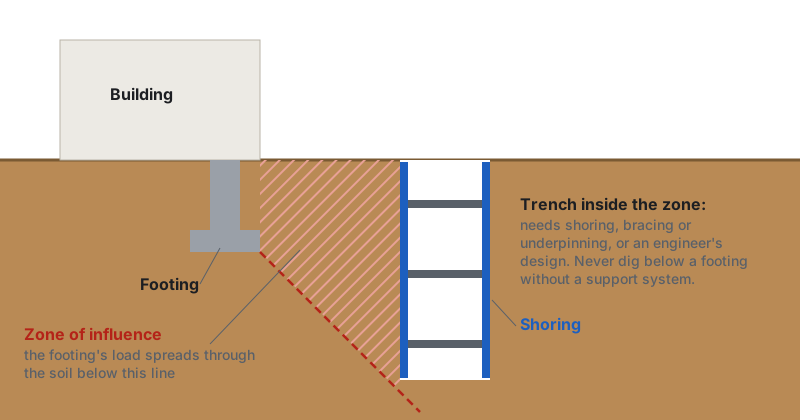
- Where an excavation could endanger the stability of adjoining buildings, walls or other structures, use support systems such as shoring, bracing or underpinning.
- Don’t excavate below the level of a nearby footing or foundation unless a support system is in place, the excavation is in stable rock, or a registered professional engineer has determined it’s safe.
- Sidewalks, pavements and similar structures must not be undermined unless supported.
- The competent person must account for the extra loads (surcharge) from structures, traffic and equipment when choosing protective systems.
The “zone of influence”
A footing doesn’t just push straight down. Its load spreads out through the soil at an angle. If you dig inside that zone, the soil holding up the footing can slide into your excavation. As a rough guide, engineers often draw a line sloping down and away from the bottom edge of the footing; digging below that line usually needs underpinning, shoring or an engineer’s design. The same idea applies to roads, slabs, retaining walls, utility poles and tower crane bases.
Surcharge loads
A surcharge is any extra weight near the edge of an excavation. It pushes on the trench walls and can cause a collapse even in good soil. Common surcharges:
- Building foundations and walls
- Traffic on adjacent roads, and its vibration
- Excavators, cranes, concrete trucks and dump trucks near the edge
- Spoil piles and stockpiled material
- Other trenches or excavations nearby
Tabulated data for trench boxes and shoring usually assume limited surcharge. Heavy surcharges need engineered protection. See Protective Systems.
Before digging next to a structure
- Footing depths and locations confirmed from drawings or test pits
- Engineer consulted when digging below or near footings
- Pre-construction survey: photos and notes of existing cracks, so new movement can be spotted
- Crack gauges or survey points installed on sensitive structures
- Dewatering planned carefully. Lowering groundwater can make neighboring buildings settle
- Traffic control and setback for road-side trenches
- Neighbors and building owners notified where required
Watch for
- New cracks in walls, foundations or pavement
- Settlement, tilting or separation of structures
- Soil sloughing from under footings or slabs
- Vibration from traffic or nearby equipment
Stop work and get the competent person or engineer if you see any of these.
Standards & references
- 29 CFR 1926.651(i): Stability of adjacent structures
Last updated: